Channel operation
- Elapsed time
- 0s
- Estimated remaining
- Estimating…
No changes saved yet.
Keep this page open while work is running. Estimates change with channel size; leaving may interrupt unsaved work.
View results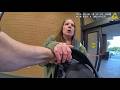
"Wait, Where Am I?" Woman Batters Airport Workers, Thinks She's at Embassy | Legal Analysis
Badge Duty Vault | 2026-10-01
Description
A routine gate removal at Tallahassee International Airport turns into a battery arrest after a visibly intoxicated woman strikes multiple airport employees — then demands to speak with the American Embassy while handcuffed inside the terminal. What makes this stop analytically significant is the c...
A routine gate removal at Tallahassee International Airport turns into a battery arrest after a visibly intoxicated woman strikes multiple airport employees — then demands to speak with the American Embassy while handcuffed inside the terminal. What makes this stop analytically significant is the collision of four simultaneous legal frameworks: a valid battery arrest under eyewitness account, a textbook Baker Act threshold, a Miranda documentation gap that creates real suppression risk, and First Amendment protections that legally shield the sustained verbal abuse officers absorbed throughout. ───────────────────────────── ⚖️ Legal Breakdown ▪ Florida Statute § 784.03 — Battery requires only general intent to make contact; voluntary intoxication is not a defense, meaning impairment does not negate criminal liability. ▪ Terry v. Ohio, 392 U.S. 1 (1968) — An eyewitness account of battery satisfies the probable cause threshold for a lawful custodial arrest. ▪ Atwater v. City of Lago Vista, 532 U.S. 318 (2001) — Custodial arrest for a misdemeanor offense is constitutionally valid where probable cause exists. ▪ Florida Statute § 856.011 — Disorderly intoxication in a public place is a separate chargeable offense; a commercial airport terminal qualifies without dispute. ▪ Florida Statute § 394.463 — Baker Act authorizes involuntary psychiatric examination when disorientation and harm risk are present; TPW transport requires operations supervisor authorization, not unilateral officer action. ▪ Florida Statute § 397.681 — Marchman Act governs concurrent involuntary substance abuse evaluation; determination is made by a medical professional at booking, not by the arresting officer. ▪ Miranda v. Arizona, 384 U.S. 436 (1966) — Custodial interrogation requires a documented rights advisement; no Miranda warning is audible on camera, creating a viable suppression motion. ▪ City of Houston v. Hill, 482 U.S. 451 (1987) — Verbal abuse and profanity directed at law enforcement is constitutionally protected speech and cannot independently support additional charges. ───────────────────────────── 📋 Case Outcome (1) Battery — Florida Statute § 784.03 (second-degree misdemeanor) (2) Disorderly Intoxication — Florida Statute § 856.011 Case outcome was not publicly available at the time of this analysis. Grades: Officers — B+ | Donna Scanlon — C+ | Male Companion — B+ ───────────────────────────── 📌 Disclaimer This video is presented for educational and documentary purposes under Fair Use (17 U.S.C. § 107). The footage was obtained via public records requests (FOIA) and is intended to provide commentary on police tactics, constitutional law, and civil rights. We do not encourage harassment of any individuals featured. ───────────────────────────── #bodycam #police #legalanalysis #BakerAct #MirandaRights #airportarrest #battery #FirstAmendment #floridapolice #tallahassee
Transcripts
AddResources
AddCharacters
AddNotes
AddQuick Actions
Event Details
EditStats History
| Date | Views | Likes |
|---|---|---|
| 2026-10-17 | 5,806 | 45 |
Danger Zone
These actions cannot be undone.