Channel operation
- Elapsed time
- 0s
- Estimated remaining
- Estimating…
No changes saved yet.
Keep this page open while work is running. Estimates change with channel size; leaving may interrupt unsaved work.
View results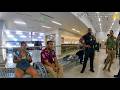
"Arrest Me!" Drunk Veteran Dares Airport Cops — Gets Exactly What He Asked For | Bodycam Analysis
Badge Duty Vault | 2026-10-02
Description
What starts as a first-time flier trying to catch a flight home from Terminal 4 turns into a ground takedown at TSA Checkpoint 22 — after the subject spends nearly eight minutes daring officers to shoot him, tase him, and arrest him. When he finally breaks from the escort, he gets exactly what he as...
What starts as a first-time flier trying to catch a flight home from Terminal 4 turns into a ground takedown at TSA Checkpoint 22 — after the subject spends nearly eight minutes daring officers to shoot him, tase him, and arrest him. When he finally breaks from the escort, he gets exactly what he asked for. The legal questions this footage raises go beyond the behavior itself. Four independent constitutional issues converge in a single 16-minute encounter: the scope of federal airport detention authority, First Amendment protection for profane challenges to law enforcement, use of force proportionality under Graham v. Connor — and whether a non-resisting companion can be physically restrained without independent legal justification. ───────────────────────────── ⚖️ Legal Breakdown ▪ 49 U.S.C. § 46503 — Interference with airport security screening personnel is a federal offense; officers at TSA checkpoints carry full arrest authority. ▪ Terry v. Ohio, 392 U.S. 1 (1968) — Intoxication complaints from multiple bystanders at a federal checkpoint satisfy reasonable articulable suspicion for detention. ▪ City of Houston v. Hill, 482 U.S. 451 (1987) — First Amendment protects verbal challenges to law enforcement, including profane and confrontational language, up to the fighting words threshold. ▪ Graham v. Connor, 490 U.S. 386 (1989) — Every use of force by law enforcement is evaluated on severity of crime, immediate threat, and active resistance — not the maximum threat imaginable. ▪ Tennessee v. Garner, 471 U.S. 1 (1985) — Force method must match the level of threat actually presented; a ground takedown on a misdemeanor predicate with a disclosed back injury faces proportionality scrutiny. ▪ Illinois v. Wardlow, 528 U.S. 119 (2000) — Physical separation from a lawful detention escort constitutes active resistance, legally authorizing a transition to physical control. ▪ Florida v. Bostick, 501 U.S. 429 (1991) — No reasonable person in this encounter would have felt free to leave; the subjects were seized within the meaning of the Fourth Amendment from the first directive to stop. ▪ Miranda v. Arizona, 384 U.S. 436 (1966) — Absence of documented Miranda advisement may affect admissibility of incriminating statements — including the subject's on-camera admission of intoxication — if charges are filed. ───────────────────────────── 📋 Case Outcome Case outcome was not publicly available at the time of this analysis. Grades: Lead Officer — B Secondary Officer — B− Primary Male Subject — C+ Secondary Male Subject — B− Female Companion — A− ───────────────────────────── 📌 Disclaimer This video is presented for educational and documentary purposes under Fair Use (17 U.S.C. § 107). The footage was obtained via public records requests (FOIA) and is intended to provide commentary on police tactics, constitutional law, and civil rights. We do not encourage harassment of any individuals featured. ───────────────────────────── #bodycam #police #legalanalysis #airportsecurity #TSA #useofforce #firstamendment #detentionrights #airportarrest #constitutionallaw
Tags
Transcripts
AddResources
AddCharacters
AddNotes
AddQuick Actions
Event Details
EditStats History
| Date | Views | Likes |
|---|---|---|
| 2026-10-17 | 1,935 | 15 |
Danger Zone
These actions cannot be undone.