Channel operation
- Elapsed time
- 0s
- Estimated remaining
- Estimating…
No changes saved yet.
Keep this page open while work is running. Estimates change with channel size; leaving may interrupt unsaved work.
View results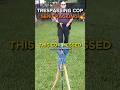
Cop Without Warrant Gets Kicked Off And Trespassed Off Private Property for Violating Owner's Rights
Inspector Darkmind | 2026-03-23
Description
A homeowner notices an officer come through a closed gate and into the yard, and what follows raises a serious Fourth Amendment question about where the public path ends and the protected area of the home begins. At the center of this footage is the curtilage doctrine and the legal weight of a phys...
A homeowner notices an officer come through a closed gate and into the yard, and what follows raises a serious Fourth Amendment question about where the public path ends and the protected area of the home begins. At the center of this footage is the curtilage doctrine and the legal weight of a physical barrier. Under Florida v. Jardines (2013), the area immediately surrounding a home is treated as part of the home itself for Fourth Amendment purposes. Police may generally use the same limited path a normal visitor would use for a knock and talk, but that implied license is narrow. It does not give the government free rein to move past signs of privacy simply because a gate is unlocked. A closed gate matters. Even without a lock, it signals that the space beyond is not open to casual entry and that the homeowner is asserting a reasonable expectation of privacy. Warrantless entry into that area generally requires consent, exigent circumstances, or some other recognized exception to the warrant requirement. A vague desire to “check on things” or casually look around is not the same as a lawful basis to step into protected curtilage. That is what makes this interaction so important. The officer appears to treat an unsecured gate as if it were an open invitation, while the homeowner makes clear that the boundary of the property still means something under the Constitution. The exchange becomes a clear example of the tension between unofficial police convenience and the long-established rule that the home holds the highest level of Fourth Amendment protection. Core legal concepts discussed in this video include curtilage, knock and talk, implied license, reasonable expectation of privacy, warrantless entry, consent, and exigent circumstances. The larger takeaway is simple: a homeowner standing on the rights attached to the home is not “causing a problem.” The homeowner is preserving the constitutional line that separates public access from protected private space. Legal Focus: 4th Amendment (Curtilage Protection) / Florida v. Jardines / Right to Exclude Scenario: Private Yard Entry vs. "Unlocked Gate" Pretext Disclaimer: This footage is shared for educational and journalistic purposes to promote constitutional literacy and legal accountability. The content is intended to demonstrate real-world applications of civil rights and is not a substitute for professional legal advice.
Transcripts
AddResources
AddCharacters
AddNotes
AddQuick Actions
Generate Transcript Not implemented
View Analytics Not implemented
Event Details
EditStats History
Latest 30 snapshots in save order, oldest saved to newest saved.
Older entries with no recorded time zone are shown as recorded and marked unknown.
| Date & time | Views | Likes | Comments |
|---|---|---|---|
| 2026-10-17 02:37:14 (zone unknown) | 113,653 | 3,971 | 176 |
| 2026-10-22 14:15:43 EDT | 113,661 | 3,969 | 176 |
Danger Zone
These actions cannot be undone.