Channel operation
- Elapsed time
- 0s
- Estimated remaining
- Estimating…
No changes saved yet.
Keep this page open while work is running. Estimates change with channel size; leaving may interrupt unsaved work.
View results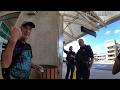
"For the Thrill" — Navy Vet Steals Same Jacket Twice, Confesses on Camera | Legal Analysis
Badge Duty Vault | 2026-09-13
Description
A Navy veteran enters an airport terminal, steals a jacket from a retail store, gets caught — then walks back ten minutes later and takes the exact same one. When officers approach, he volunteers a full confession before a single Miranda warning is ever issued. What makes this encounter legally sig...
A Navy veteran enters an airport terminal, steals a jacket from a retail store, gets caught — then walks back ten minutes later and takes the exact same one. When officers approach, he volunteers a full confession before a single Miranda warning is ever issued. What makes this encounter legally significant is not the theft itself, but what the subject says next: two spontaneous confessions, a detailed explanation of his motive, and a return visit that eliminates every mistake defense available to him — all on bodycam. ⚖️ Legal Breakdown ▪ Terry v. Ohio, 392 U.S. 1 (1968) — DHS-trained TSA behavioral detection officers documented concealment behavior sufficient to establish reasonable suspicion for the initial stop. ▪ Illinois v. Gates, 462 U.S. 213 (1983) — Two voluntary confessions, TSA witness testimony, and store confirmation combine into probable cause for both theft counts. ▪ Miranda v. Arizona, 384 U.S. 436 (1966) — Warnings are required before custodial interrogation; the spontaneous first confession likely survives, but post-arrest statements face a suppression challenge. ▪ Berkemer v. McCarty, 468 U.S. 420 (1984) — A brief Terry stop does not trigger Miranda, but the threshold shifts once the encounter crosses into de facto custody. ▪ Rhode Island v. Innis, 446 U.S. 291 (1980) — An unsolicited, unprompted statement does not constitute interrogation and carries no Miranda bar. ▪ City of Revere v. Massachusetts General Hospital, 463 U.S. 239 (1983) — Officers are constitutionally obligated to provide medical care to detainees; paramedics were called immediately upon disclosure. ▪ Estelle v. Gamble, 429 U.S. 97 (1976) — Deliberate indifference to a serious medical need constitutes a constitutional violation; no indifference is present here. 📋 Case Outcome (1) Shoplifting — Count 1 (first theft; store recovered jacket but elected to prosecute the second incident) (2) Shoplifting — Count 2 (second theft; store confirmed ownership and pressed charges) (3) Formal trespass from airport property Officer: B+ Subject: D TSA Behavioral Detection Officers: A Case outcome was not publicly available at the time of this analysis. 📌 Disclaimer This video is presented for educational and documentary purposes under Fair Use (17 U.S.C. § 107). The footage was obtained via public records requests (FOIA) and is intended to provide commentary on police tactics, constitutional law, and civil rights. We do not encourage harassment of any individuals featured. #bodycam #police #legalanalysis #Miranda #FourthAmendment #shoplifting #airportarrest #TSA #constitutionallaw #NavyVeteran
Tags
Transcripts
AddResources
AddCharacters
AddNotes
AddQuick Actions
Event Details
EditStats History
| Date | Views | Likes |
|---|---|---|
| 2026-10-17 | 3,865 | 37 |
Danger Zone
These actions cannot be undone.